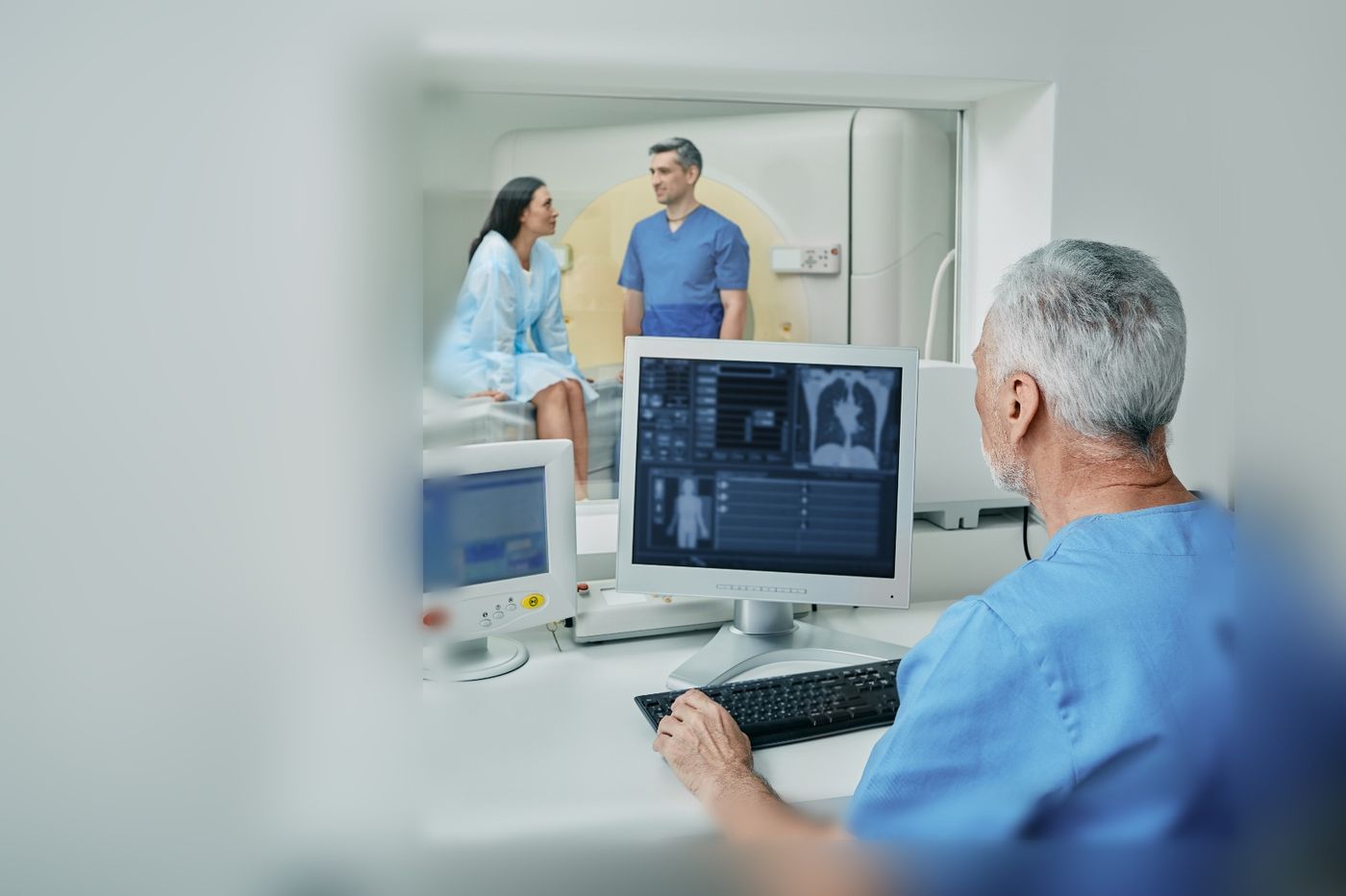
Imaging capacity has outrun reporting capacity. A mobile unit can take a thousand chest X-rays in a week. A clinic can scan every patient who walks through the door. If there is no radiologist within reach, those images wait, and so does the patient. CloudX, the Central Radiology Reporting Solution (CRRS) from Healthcare Framework, was built to close that gap.
The lung health challenge
Global shortages of trained radiologists and uneven access to expert interpretation create reporting backlogs, delaying diagnosis and treatment, particularly in high-burden and resource-limited settings. International guidelines suggest approximately 100-120 radiologists per million people for an adequately resourced health system. Across low-income countries there are fewer than 2 per million, and at least 14 African countries are reported to have no practising radiologist at all.
The chest X-ray is the most performed radiology examination, with up to 30% reporting backlog in high-volume centres.
Sources: WHO Global Tuberculosis Report 2025. Edzie et al., “Density and regional distribution of radiologists in a low-income country: the Ghana situation”, Chinese Journal of Academic Radiology, 2023. World Health Expo / Radiological Society of Southern Africa, 2024. Diagnostic Imaging. collectiveminds.health.
CloudX Central Radiology Reporting Solution
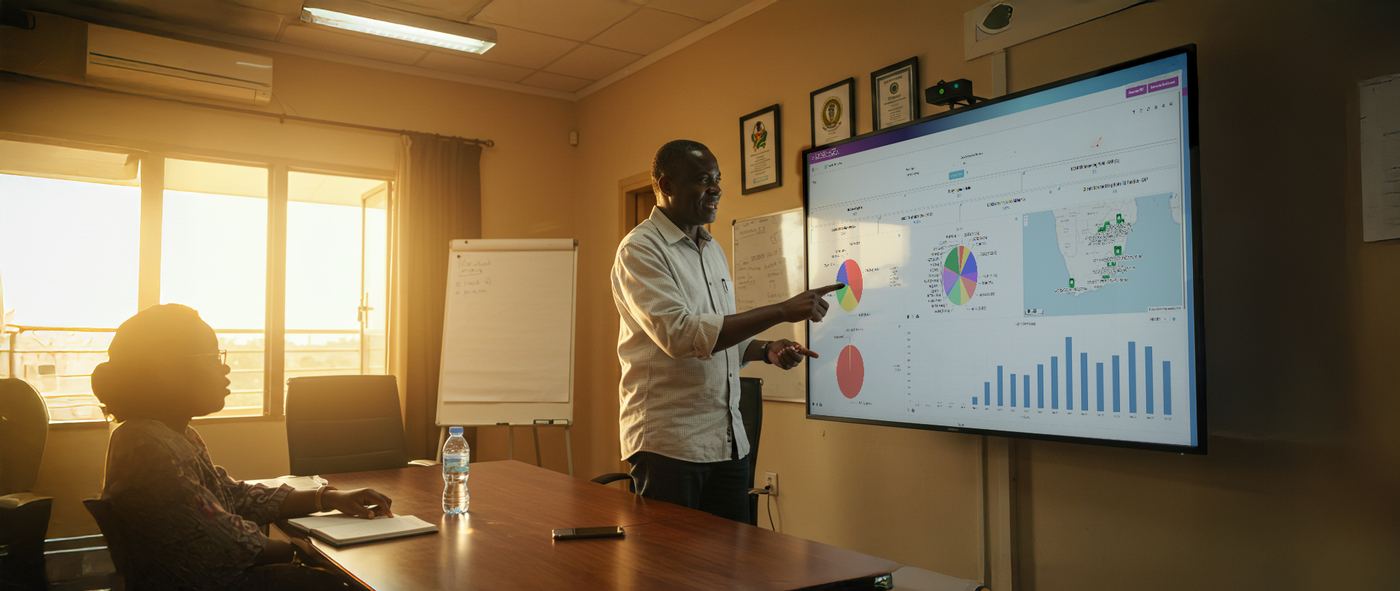
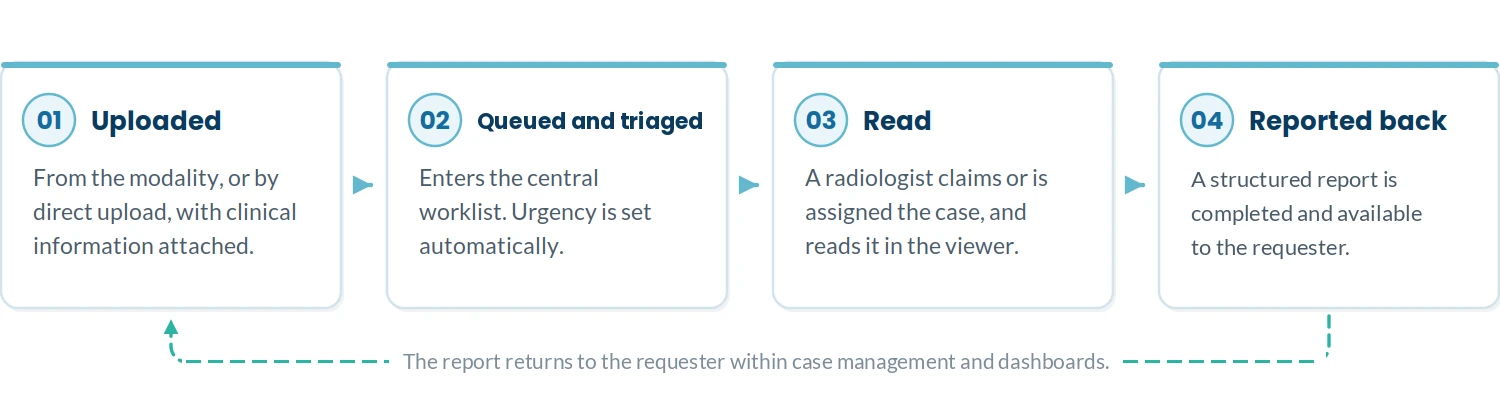
CloudX is a cloud-hosted reporting layer that sits between wherever imaging is captured and wherever reporting capacity actually exists. A study taken anywhere is uploaded to one central queue. A qualified radiologist anywhere else, in the next town, the next country or on another continent, opens it, reads it and reports it inside the platform. The structured report is available to the requester within case management and dashboards.
CloudX is built and operated inside the Healthcare Framework platform. It grew out of more than a decade of operational experience supporting screening programmes across more than twenty countries, where the HCF ecosystem has screened over five million individuals.
One queue, not one worklist per site
Every study uploaded to CloudX, from any facility in any country, enters the same central queue. Radiologists work from that queue rather than from a folder belonging to one hospital, which pools reporting capacity across a programme instead of stranding it inside one site.
- Automated triage: urgent and high-need studies are surfaced ahead of routine work automatically, so the queue orders itself.
- Claim, assign, release: radiologists claim work from the pool, and administrators can assign or release a case for handover at any point.
- Load balancing and double reading: work spreads across radiologists and facilities, and a study can be sent for a second read where the protocol calls for one.
- Structured reporting: templates are set once and used everywhere, so a report from one site reads the same as a report from another.
Three ways a study gets read
The reading path is chosen per programme, per facility or per case, and changed without moving to another system. Reporting can be prospective or retrospective, and blinded where a study protocol requires it.
- Radiologist only: the study goes to the central worklist and is read by a radiologist. The core CRRS path.
- AI only: a first-pass read with no radiologist in the loop, the highest-throughput option for population screening.
- AI + radiologist (hybrid): AI reads first and triages, then the radiologist confirms.
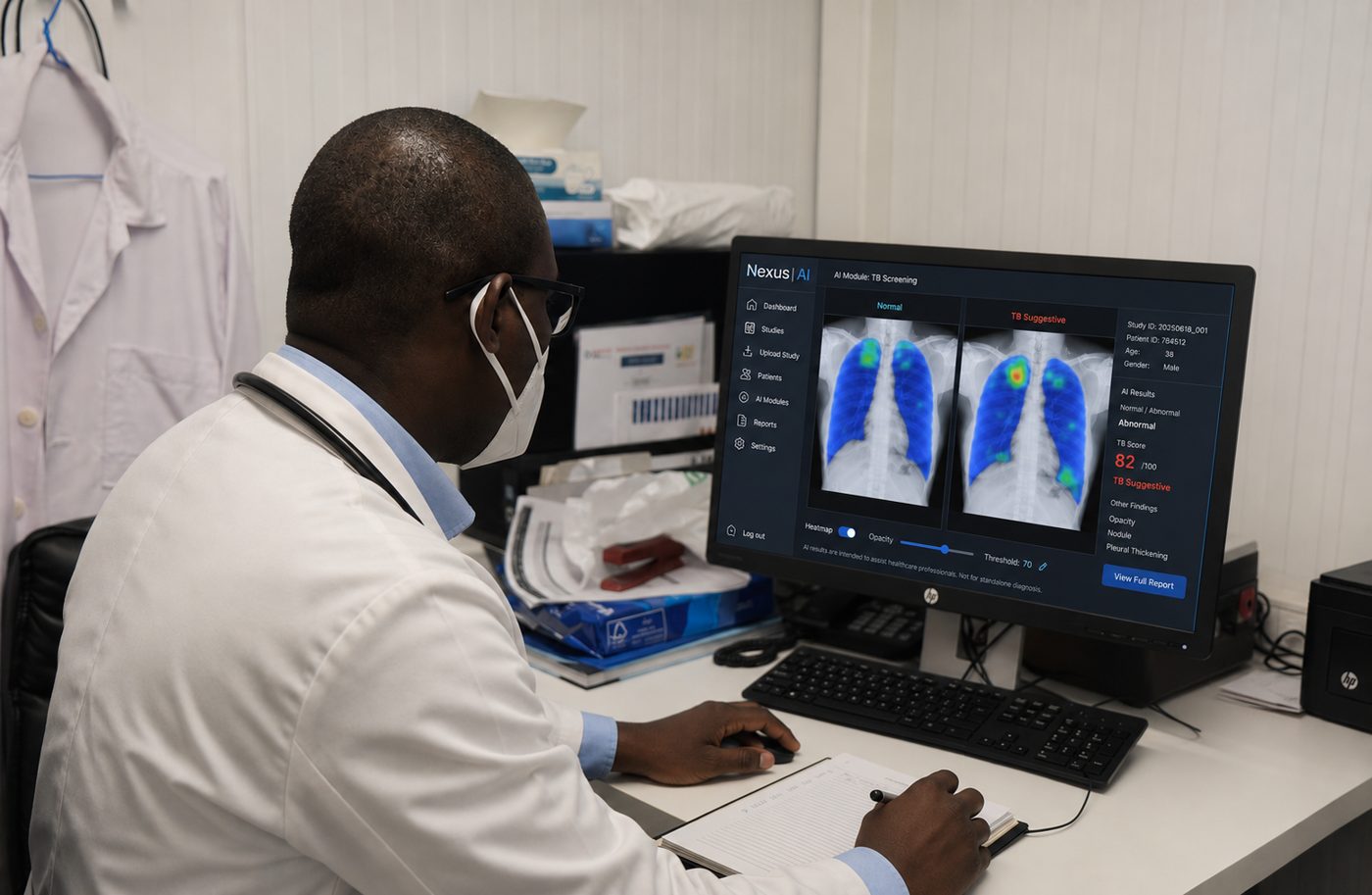
The chest X-ray AI module is Nexus AI CXR 1.0, CE MDR Class IIb certified, developed in collaboration with Google, evaluated by the Stop TB Partnership and published in The Lancet Digital Health. Its outputs (classification, score, isolines and heat maps) are returned into the CloudX case itself rather than into a separate system.
Part of the HCF ecosystem, or on its own
Where a programme also runs Healthcare Framework, clinical information flows into the CloudX case and the finished report flows back into the patient record automatically, without re-keying. Where it does not, CloudX runs on its own and the clinical context simply arrives with the study. Completed reports return to the radiographer or facility that sent the study, and can be printed for the patient or emailed to the referring clinician.
Built for real-world programmes
CloudX supports DICOM ingestion by direct upload or automated routing from any imaging modality, with a secure web-based interface, embedded DICOM viewer, patient context and structured templates. A radiologist needs only a browser and credentials: no software at the reading end, and no film, discs or couriers. Where connectivity drops, studies are held on site and uploaded once the link returns.
CloudX is not limited to chest X-rays or TB screening: the same queue handles general radiography including extremities, spine and abdomen. It scales from one facility to a district, a national screening programme or multiple countries on one platform. Data protection is by design, aligned with POPIA, GDPR and HIPAA principles, with role-based access and full audit trails.
From the Mafefe community screening programme, where chest X-rays are routed through CloudX for reporting by specialist radiologists in partnership with MBOD and Wits University, to national TB programmes, CloudX is extending expert radiology reach into low-resource and remote settings.
Put a radiologist behind every X-ray.
Nexus AI CXR is a decision-support tool. It supports, and does not replace, clinical interpretation and diagnosis. Final responsibility remains with the reporting radiologist. CloudX is the platform Nexus AI CXR runs inside and is not itself a medical device.
#CloudX #Teleradiology #CentralRadiologyReporting #Radiology #TB #DigitalHealth #HCF